A tree stump can become an awkward part of a property long after the tree itself has gone. It may sit in the middle of a lawn, beside a driveway, close to a fence or in an area you want to landscape again.
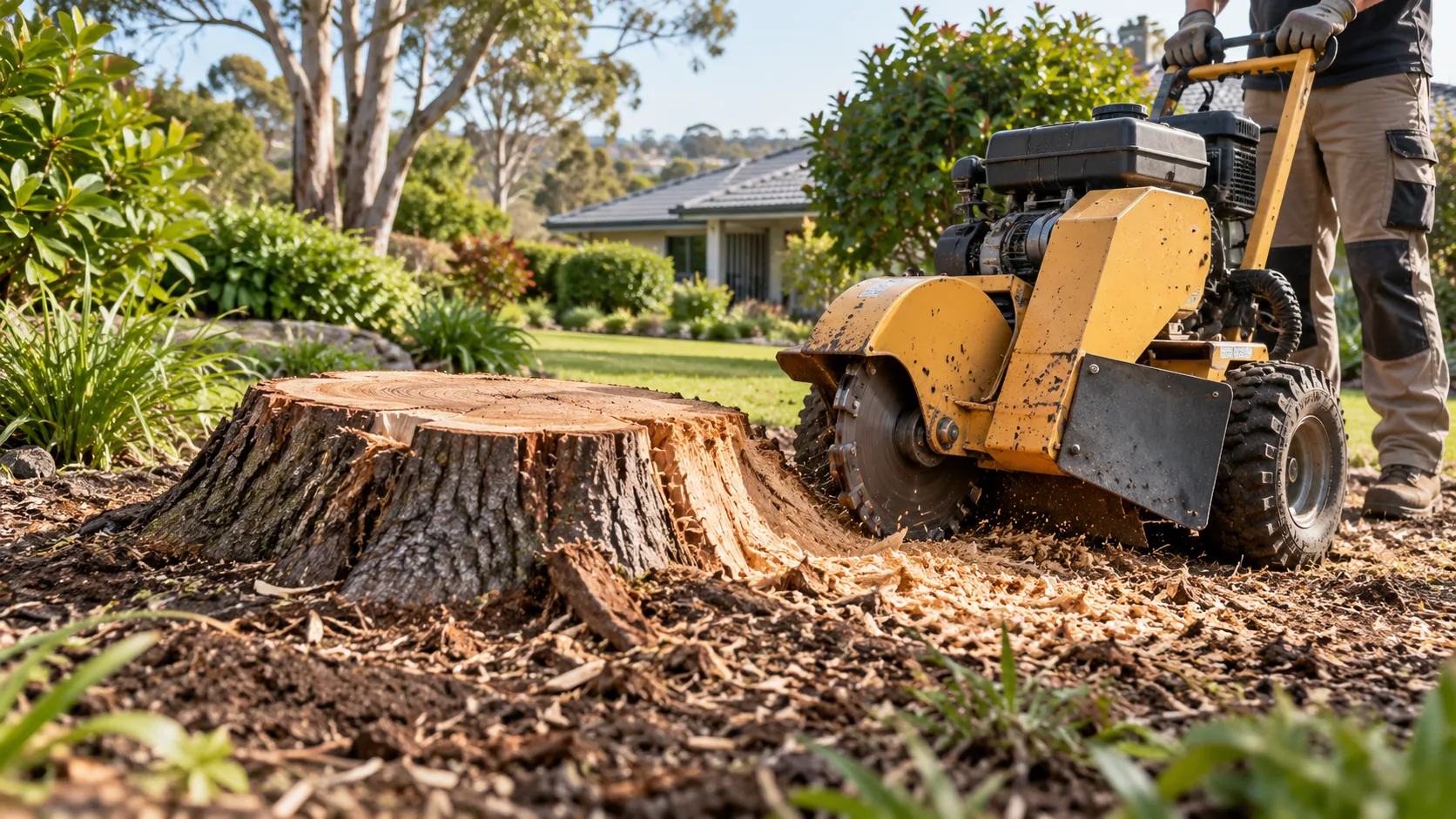
Stump grinding reduces the visible stump by mechanically grinding the remaining wood into smaller material. It is commonly considered when the aim is to clear the stump from the usable surface area without excavating the entire root system.
The right approach depends on the stump size, its position, surrounding surfaces, access to the site and what you want to do with the area afterwards.
If a stump is getting in the way around your Melbourne property, contact the team to discuss whether stump grinding is suitable for the site.
When stump grinding may be needed
Stump grinding may be useful when a remaining tree stump has become a practical obstacle rather than something you want to leave in place.
Common situations include:
- a stump sitting in a lawn or garden bed you want to reuse;
- a stump interfering with mowing or regular garden maintenance;
- a stump taking up space beside a driveway or path;
- a stump creating an awkward obstacle around an outdoor area;
- a stump left behind after tree removal;
- a stump close to a fence, shed, paving or other property feature;
- several old stumps making part of a property harder to maintain;
- a planned landscaping change where the visible stump needs to be reduced first.
The service should match the outcome you need. Grinding a stump is not the same as removing every root from the ground, so it is worth being clear about what you plan to do with the space afterwards.
What stump grinding involves
Stump grinding focuses on the remaining woody stump rather than removing the whole root system from the soil.
A stump grinder uses a cutting wheel to break the stump into smaller wood material. How far the stump can or should be ground depends on the site, the stump itself and the intended use of the area.
Before the work is planned, relevant factors may include:
- the stump diameter;
- how high the stump sits above ground;
- visible root flare around the base;
- the stump’s position in the property;
- access to the stump;
- nearby fences, paving, walls, garden beds or structures;
- the space available for equipment;
- what the customer wants to do with the area once the stump is reduced.
Stump grinding is often chosen because the visible stump is the main problem. If the objective is to physically remove more of the stump and root mass, see stump removal Melbourne for the separate service intent.
How we approach stump grinding
The job starts with the site rather than the machine.
We first need to understand where the stump is, what surrounds it and what outcome you want from the work. A stump in an open lawn is different from one beside paving, a fence, a retaining edge or a narrow accessway.
The assessment may consider:
- how large the stump is;
- whether the stump is level with the ground or projects above it;
- whether major surface roots are part of the problem;
- how easily the work area can be reached;
- how much space is available around the stump;
- whether nearby surfaces or structures limit access;
- whether there are site features that need to be identified before work begins;
- what condition the area needs to be left in for the next stage of landscaping or maintenance.
The aim is to confirm a practical scope before the work is arranged rather than assuming every stump can be treated in exactly the same way.
What affects stump grinding cost in Melbourne?
There is no single price that applies to every stump.
The amount of work can change considerably depending on the stump and the property. Factors that may affect the quote include:
- stump diameter and overall size;
- number of stumps;
- height of the stump above ground;
- extent of visible surface roots;
- access width and site layout;
- distance between the stump and vehicle or equipment access;
- nearby fences, walls, paving, sheds or garden structures;
- how deep or extensive the grinding needs to be for the intended outcome;
- the amount of resulting material that needs to be managed;
- whether other tree work is being arranged at the same property.
A small stump in an open front yard is a different job from a broad stump at the back of a narrow block with limited access.
The quote should be based on the actual stump and site conditions.
Stump grinding around Melbourne homes and properties
Melbourne properties can present very different stump-grinding conditions.
On an established suburban block, a stump may sit between garden beds, beside a boundary fence or close to paving that has been added years after the tree was planted. On tighter properties, side access can be narrow and the stump may be well away from the front of the site.
Other stumps sit in open lawns where the main goal is simply to remove the visible obstacle before replanting or changing the garden layout.
The local context matters because access and surrounding property features can have as much influence on the job as the stump size itself.
Do not assume a stump is straightforward simply because the tree has already been removed.
Who stump grinding may be suitable for
Stump grinding may be relevant for:
- homeowners clearing space after tree removal;
- residential property owners improving access or garden usability;
- landlords preparing a property for maintenance or landscaping;
- property investors tidying outdoor areas between tenancies or projects;
- property managers dealing with old stumps around managed properties;
- commercial property owners where a stump is interfering with usable outdoor space.
Confirm the scope for commercial or multi-site work before arranging it.
What to expect
1. Tell us about the stump
Explain where the stump is, roughly how large it is and what you want to do with the area afterwards. Photos may help show the stump and surrounding access.
2. Discuss the site conditions
The stump location, nearby structures, access and intended outcome need to be understood before the scope can be defined.
3. Assess the work required
The stump size, visible roots, access and surrounding property are considered so the proposed work matches the site.
4. Confirm the proposed service
The intended stump grinding scope should be explained before you decide whether to proceed.
5. Arrange the work
Once the details are agreed, the service can be scheduled.
You do not need to know the technical details of stump grinding before making an enquiry. Start by explaining what is left on the property and what you want the area to be used for afterwards.
Stump grinding or stump removal?
The two terms are often used together, but they are not exactly the same service.
Stump grinding reduces the remaining stump by grinding the wood into smaller material. The root system is generally not excavated in full.
Stump removal usually refers to removing more of the stump and root mass from the ground. That can involve a different level of ground disturbance and a different scope of work.
Which option is more appropriate depends on what comes next.
If you mainly want the visible stump reduced so the area is easier to maintain or landscape, grinding may be suitable. If you need more of the stump and roots physically removed for a specific construction, excavation or landscaping outcome, the requirements may be different.
See stump removal Melbourne for the separate service page.
What happens to the roots after stump grinding?
Stump grinding should not be described as complete root removal.
Grinding deals with the stump and, depending on the agreed scope, may address some visible or accessible root material near the stump. The wider underground root system can remain in the soil.
This distinction matters if you are planning excavation, new paving, construction or another use where remaining roots may affect the next stage of work.
If the future use of the area is important, explain that before the service is arranged so the required outcome can be discussed properly.
Safety and property considerations
Stump grinding involves powered cutting equipment working close to the ground. The stump may also sit close to hard surfaces, structures, garden edges or other site features.
Relevant considerations can include:
- keeping people clear of the work area;
- nearby fences, walls and paving;
- confined access;
- rocks, debris or other material around the stump;
- visible services or property infrastructure;
- the condition of the surrounding ground;
- nearby garden features that need to remain intact.
Do not attempt to grind a stump with improvised cutting equipment or machinery that is not suited to the work.
Where underground services or other concealed site constraints may be relevant, they should be identified and managed appropriately before work proceeds. Confirm how concealed site constraints will be checked before work begins.
Council rules and stump grinding
Council requirements can vary across Melbourne.
A stump that remains after an approved or otherwise permitted tree removal is different from a stump associated with a protected tree, planning condition or unresolved tree-removal requirement.
Do not assume the same rule applies across every Melbourne council area. Where the stump forms part of a tree-removal matter, protected-tree issue or planning requirement, check the relevant local council rules before work proceeds.
Check whether any permit advice or council documentation is included in the proposed service.
Why the final use of the area matters
The best stump-grinding scope depends on what happens after the stump is gone from view.
A customer who wants to mow across the area may have a different requirement from someone preparing a garden bed, changing a path or planning a more substantial landscaping project.
That is why the useful question is not simply, “Can the stump be ground?”
It is:
“What do you need this area to do once the stump is no longer in the way?”
That outcome helps determine whether stump grinding is suitable or whether a different stump-removal approach should be considered.
Frequently asked questions about stump grinding
What is stump grinding?
Stump grinding uses specialised cutting equipment to reduce the remaining tree stump into smaller wood material. It is different from excavating and removing the entire root system.
Is stump grinding the same as stump removal?
No. Stump grinding focuses on reducing the stump, while stump removal generally involves physically removing more of the stump and root mass. The right option depends on what you need to do with the area afterwards.
Can any stump be ground?
Many stumps can potentially be ground, but suitability depends on stump size, condition, access and surrounding site constraints. The property should be assessed before the scope is confirmed.
How deep is a stump ground?
There is no single depth that should be promised for every job. The appropriate depth depends on the stump, site conditions and the intended use of the area. Confirm the required outcome before the work is arranged.
What happens to the roots?
The wider underground root system can remain after stump grinding. Grinding should not be presented as complete root removal unless the agreed scope specifically includes additional root work.
Can stump grinding help before landscaping?
It can be useful when the visible stump is obstructing a garden or lawn area. If the site is being prepared for paving, excavation, construction or another specific use, explain that before the work so the required scope can be considered.
Does stump size affect the price?
Yes. Stump diameter, visible roots, access, surrounding structures and the amount of grinding required can all affect the work involved.
Can you grind a stump in a narrow backyard?
Access is one of the main factors that needs to be checked. A narrow side path, steps, gates or structures can affect whether suitable equipment can reach the stump. The available access should be checked before the scope is agreed.
Do I need a permit for stump grinding in Melbourne?
Requirements vary. Stump work connected with a protected tree, planning condition or tree-removal approval may need to be considered against local council requirements. Check the relevant council rather than assuming one Melbourne-wide rule.
Can stump grinding be arranged after tree removal?
Yes, stump grinding is commonly considered after a tree has been removed and the remaining stump is no longer wanted. Check whether it is included with tree removal or quoted separately.
Related tree services
Depending on the problem on your property, these pages may also be relevant:
Ask about stump grinding for your Melbourne property
If an old stump is taking up space, interfering with garden maintenance or getting in the way of a planned landscaping change, tell us where it is and what you want to do with the area afterwards.
That gives the team a practical starting point for discussing whether stump grinding is the right service and what needs to be assessed before the work is arranged.
Contact the team to discuss stump grinding for your Melbourne property.