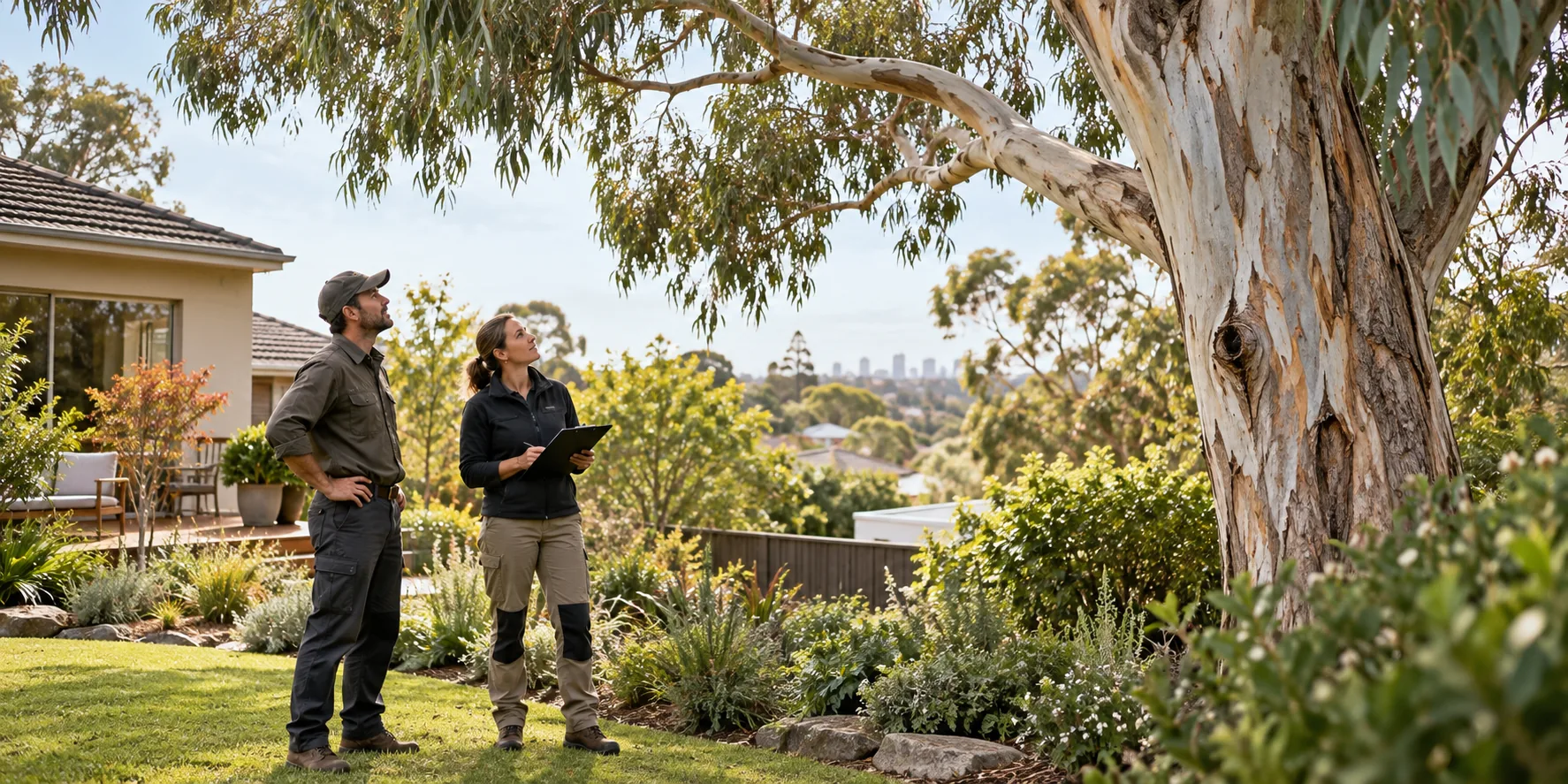
Managing trees on a shared property can involve more than deciding whether a branch should be cut back. The location of the tree, the condition of its branches, nearby buildings, common areas, vehicle access and the reason for the work can all affect what should happen next.
Our body corporate tree services in Melbourne are intended to help people responsible for shared properties identify practical tree-care needs and clarify the work required. That may involve pruning overgrown growth, addressing dead or damaged branches, improving clearance around commonly used areas or assessing a tree before a larger decision is made.
You do not need to diagnose the tree or specify a pruning method before making an enquiry. Start with what you can see, where the tree is located and what concern has been raised. The next step is to understand the property, the tree and the outcome the owners corporation or property manager is trying to achieve.
When body corporate tree services may be needed
Shared properties can contain trees beside driveways, pedestrian paths, car parks, courtyards, fences, roofs, common gardens and other areas used by residents, visitors or contractors. Tree work may be worth assessing when growth begins to affect how those spaces are used or when a change in the tree raises a practical concern.
Common situations include:
- branches extending towards roofs, gutters, fences or other structures
- growth reducing clearance over shared driveways or pedestrian areas
- dead, damaged or deteriorating branches within the canopy
- a tree that has become dense, unbalanced or difficult to manage
- branches affecting parking areas, entrances or common outdoor spaces
- storm or wind damage that has changed the condition of a tree
- trees that have received little maintenance and now need their condition reviewed
- several trees on the same property requiring different types of attention
- concerns raised by residents, committee members or a property manager
- uncertainty about whether pruning, branch removal, assessment or another service is appropriate
The visible issue is only the starting point. A low branch over a driveway, for example, creates a different problem from deadwood over a courtyard. A dense canopy beside a building also calls for a different decision from a split or damaged limb after strong wind.
For body corporate properties, it helps to define the reason for the work before deciding on the treatment. That keeps the scope tied to the property problem rather than defaulting to broad cutting or unnecessary work.
What body corporate tree services involve
Body corporate tree services can cover different tree-care requirements depending on what is happening across the property. The work should be based on the individual tree, its location and the outcome required in the shared area.
A typical enquiry may involve one or more of the following needs.
Tree pruning
Pruning can be considered where selected branches need attention because of growth, clearance, dead or damaged material, canopy density or the way a tree is interacting with the property.
The purpose matters. Pruning for driveway clearance is not the same as pruning damaged growth, and neither should automatically mean reducing the whole canopy.
Where pruning is the main requirement, the dedicated commercial tree pruning Melbourne page explains that service in more detail.
Branch removal
A specific branch may be the main concern. It could be dead, damaged, poorly positioned or extending into an area where clearance is required.
In these cases, the job may be narrower than general tree pruning. The tree branch removal Melbourne page covers branch-specific work separately.
Deadwood concerns
Dead branches can occur within otherwise living trees. Where deadwood has been identified or suspected, the appropriate response depends on its location, size and the areas below or around the tree.
More information is available on the deadwood removal Melbourne page.
Tree condition and risk concerns
Sometimes the property manager or committee knows that something looks wrong but does not know what work to request. Changes in the canopy, damaged limbs, deterioration or concerns about what could happen if part of the tree failed may call for assessment before physical work is scoped.
The tree health assessment Melbourne and tree risk assessment Melbourne pages explain those different assessment needs.
Tree removal considerations
Removal is a separate decision from routine tree maintenance. It should not be treated as the automatic answer to an inconvenient or overgrown tree.
Where removal is being considered, factors such as the reason for removal, the tree’s condition, surrounding property and any applicable council or planning requirements may need to be considered first. See tree removal Melbourne for the dedicated service information.
How we approach tree care on shared properties
A body corporate tree job starts with the reason the tree has been raised as an issue. That reason may be clearance, damaged growth, a change in condition, an access problem or a maintenance concern.
From there, the work needs to be considered in the context of the site.
We look at the tree and the problem together
The same branch can have different significance depending on where it is growing. A branch over an unused garden bed presents a different property-management question from one over a building entrance, shared path or vehicle area.
That is why the location and use of the surrounding space matter when defining the job.
We consider nearby structures and access
Shared properties often place trees close to built features. Buildings, fences, car parks, driveways, paths and garden structures can influence both the desired outcome and the practical scope of the work.
Access to the tree also matters. A tree in an open area is different from one behind buildings or within a restricted common space. The site should be understood before the work is confirmed rather than assuming every property can be approached in the same way.
We focus on the reason for pruning or other tree work
Tree work should have a clear purpose. If the concern is a branch approaching a roof, the scope should address that problem. If the concern is dead material, the focus changes. If the concern is the overall condition of the tree, assessment may need to come before pruning.
This problem-led approach helps avoid treating every body corporate enquiry as a generic trimming job.
We separate immediate issues from future maintenance
A property may have one branch that needs attention now while other trees simply need to be kept under observation or considered as part of future maintenance planning.
Separating those needs can make it easier for a committee or property manager to understand what is being proposed and why. It also avoids turning a specific concern into a broader scope without a clear reason.
Body corporate tree services around Melbourne properties
Melbourne body corporate and owners corporation properties vary widely. Some contain a small number of dwellings with a shared driveway and garden. Others include larger residential or mixed-use sites with parking areas, internal roads, courtyards and several common spaces.
That variation changes how tree issues present themselves.
On a compact property, a single tree may sit close to several boundaries, roofs and vehicle areas at once. On a larger site, the challenge may be working out which trees require attention first and which issues relate to pruning, damaged branches, general maintenance or further assessment.
Shared use is another important factor. A tree beside a private backyard is different from a tree beside a common entrance or parking area used throughout the day. The service scope should reflect how the area is actually used rather than considering the tree in isolation.
Melbourne weather can also expose existing branch problems or create new damage. After wind or storm events, a property may have hanging, broken or fallen material as well as less obvious changes within a canopy. The storm-damaged tree services Melbourne page covers that situation in more detail.
Confirm service availability for your suburb when making an enquiry.
Who body corporate tree services are for
This page is intended for people responsible for making or coordinating tree-care decisions on shared properties.
That can include:
- owners corporations and body corporate committees
- property managers overseeing shared residential properties
- facilities managers responsible for common areas
- landlords or investors involved in managed multi-unit properties
- commercial property owners with shared external areas
- real estate and property-maintenance professionals coordinating work on behalf of a property
The person making the initial enquiry does not need to know the technical name of the service required. In many cases, the useful starting information is simply what has been noticed, where the tree is and what part of the property is affected.
For property managers handling tree issues as part of a broader management role, see property manager tree services Melbourne.
For businesses and other commercial sites outside the body corporate context, see commercial tree services Melbourne.
What to expect from a body corporate tree service enquiry
Shared-property work benefits from a clear scope because the person arranging the job may need to explain the proposed work to other stakeholders.
A practical process is:
1. Tell us what has been noticed
Describe the tree or branch, where it is located and why it has become a concern. Photos may help communicate the issue, but the final scope should not rely on a photo alone where site conditions matter.
Useful information can include whether the tree is near a driveway, building, parking area, path, fence or common outdoor space.
2. Explain the outcome the property needs
The objective might be better clearance, removal of damaged material, management of overgrown branches or simply understanding what action is appropriate.
A clear outcome makes it easier to distinguish necessary work from optional maintenance.
3. Assess the work and site conditions
The tree, surrounding property and access need to be considered before the proposed work is confirmed. Where the concern relates to tree condition or potential failure rather than a straightforward pruning requirement, further assessment may be appropriate.
4. Confirm the proposed service
The scope should identify the tree-care task being considered rather than relying on broad wording such as “trim the trees”. That may mean selected pruning, branch removal, deadwood work, assessment or another appropriate service.
5. Arrange the work
Once the required work and relevant site details are understood, the next step is arranging the service. Timing, access requirements and other job-specific details should be confirmed for the actual property rather than assumed in advance.
This process can also help the person coordinating the job communicate more clearly with a committee, owner or other decision-maker.
Safety and property considerations for shared sites
Tree work on shared properties needs to account for both the tree and the areas around it. Residents, visitors, vehicles and buildings may all be close to the work area.
Potential considerations include:
- branches over or near pedestrian routes
- limbs above parked vehicles or parking access
- trees beside shared driveways
- growth near roofs, gutters, fences or other structures
- damaged branches after strong wind or storms
- restricted access to the tree
- common areas that may be in regular use
- the position of neighbouring property or boundaries
These factors do not automatically mean a tree is unsafe or that removal is required. They do affect how the concern should be assessed and how any work is scoped.
Property managers and residents should also avoid attempting hazardous tree work themselves. Large branches, damaged limbs and work at height can create risks that are not obvious from the ground. Where a branch has fallen onto electrical infrastructure, a tree is affecting a public road or there is an immediate threat to people, the appropriate emergency or utility authority may need to be contacted rather than approaching the tree.
If a tree issue appears urgent, the emergency tree services Melbourne page explains the distinction between an urgent situation and work that can be assessed and scheduled normally. Availability and response times should always be confirmed directly rather than assumed.
Council rules and permits for body corporate tree work
Tree controls are not uniform across Melbourne. Requirements can vary between councils and can also depend on the individual property, the tree, planning controls and the type of work proposed.
A body corporate or owners corporation should not assume that a rule applying to one property automatically applies to another. This is particularly important where substantial pruning or tree removal is being considered.
Before work proceeds, it may be necessary to check:
- the relevant local council requirements
- whether planning controls or overlays apply to the property
- whether the tree is subject to a local protection requirement
- whether the proposed work needs permission
- whether the owners corporation has its own approval process for common-property work
The last point is an internal property-management matter rather than a universal council rule. The person arranging the work should confirm what approvals or decisions are required within the specific owners corporation.
Where a council, planning process or other decision-maker requires formal written tree information, a general service enquiry may not be enough. The arborist reports Melbourne page explains the separate issue of formal tree reporting and why the required report scope should be confirmed before commissioning one.
How to choose a tree service provider for a body corporate property
The right questions can make it easier to compare proposed work and reduce uncertainty for other stakeholders.
Can they explain what work is being proposed and why?
A quote or scope should be understandable to someone who is not a tree specialist. Ask what problem the proposed work addresses and whether it relates to one branch, selected canopy work, assessment or another service.
Have they considered the shared areas around the tree?
The tree should not be viewed in isolation. Ask how nearby buildings, driveways, parking, pedestrian areas, fences and access affect the job.
Are any claimed qualifications or credentials relevant to the work?
If a formal assessment, arborist report or specialist opinion is required, ask what qualification the person providing it holds and whether it meets the requirement of the council or organisation requesting the document.
Do not assume that the word “arborist” alone confirms a particular qualification level or report capability.
Is the scope clear enough for other decision-makers to understand?
Body corporate work may need approval from people who were not present when the tree was first discussed. A clear description of the issue and proposed work can make that process easier.
Have council or property-specific requirements been checked where relevant?
The service provider should not make broad claims that all tree work is exempt or that a particular approval always applies. Requirements need to be checked for the actual property and proposed work.
Common questions about body corporate tree services in Melbourne
What tree services might a body corporate property need?
It depends on the trees and the property. Common needs can include pruning, branch removal, deadwood work, clearance around shared areas, assessment of damaged trees and consideration of removal where appropriate. The correct service should follow the actual problem rather than being assumed in advance.
Is a body corporate responsible for trees on common property?
Responsibility depends on the specific property, ownership arrangements and applicable owners corporation documents or rules. This page does not determine legal responsibility. The property manager or owners corporation should confirm whether the tree forms part of common property and who has authority to approve the work.
Can you prune trees near shared driveways or parking areas?
Branches affecting clearance around driveways and parking areas are common reasons to consider pruning. The tree, branch position, required clearance, surrounding structures and site access should be assessed before the work is defined.
Does every overgrown tree need heavy pruning?
No. The amount and type of pruning should relate to the reason for the work and the tree itself. A clearance issue may be addressed through selected branch work rather than broad canopy reduction.
What if residents disagree about what should happen to a tree?
A clear assessment of the visible problem and proposed scope can give decision-makers better information, but internal owners corporation decisions need to follow the property’s own governance process. Tree-care advice does not replace that process.
Do we need an arborist report before tree work?
Not for every tree-care job. A formal report may be requested for a council, planning, development, risk or other documented decision. If a report is required, confirm who needs it and what information or qualification they require before commissioning the document.
Do council permits apply to body corporate tree work?
They can, but there is no single Melbourne-wide rule that applies to every property and tree. Requirements vary by council, property and proposed work. Check the relevant local requirements before work that may need approval.
Can several trees be assessed as part of the same property enquiry?
A shared property may have several different tree concerns. Each tree can present a different issue, so the scope should distinguish which trees need pruning, branch work, assessment or another action rather than treating the whole site as one identical task.
What is the difference between body corporate tree services and commercial tree services?
Body corporate tree services focus on the practical needs of shared properties and the people coordinating decisions for common areas. Commercial tree services cover a broader range of business and managed-property settings. There can be overlap, but this page is specifically written around owners corporation and shared-property concerns.
How much do body corporate tree services cost in Melbourne?
Cost depends on the actual scope of work. Relevant factors can include the number and size of trees, the type of work required, access, surrounding structures and site conditions. A price should be based on the property and defined job rather than a generic figure that may not match the work.
Talk to us about tree work on your body corporate property
If a tree or branch is creating a concern on a shared Melbourne property, start by telling us what you can see, where the tree is located and what area is affected.
You do not need to decide whether the answer is pruning, branch removal, assessment or another service before getting in touch. The useful first step is to clarify the problem and the property conditions so the appropriate scope can be discussed.
Contact us to discuss the tree-care requirements for your body corporate or owners corporation property.