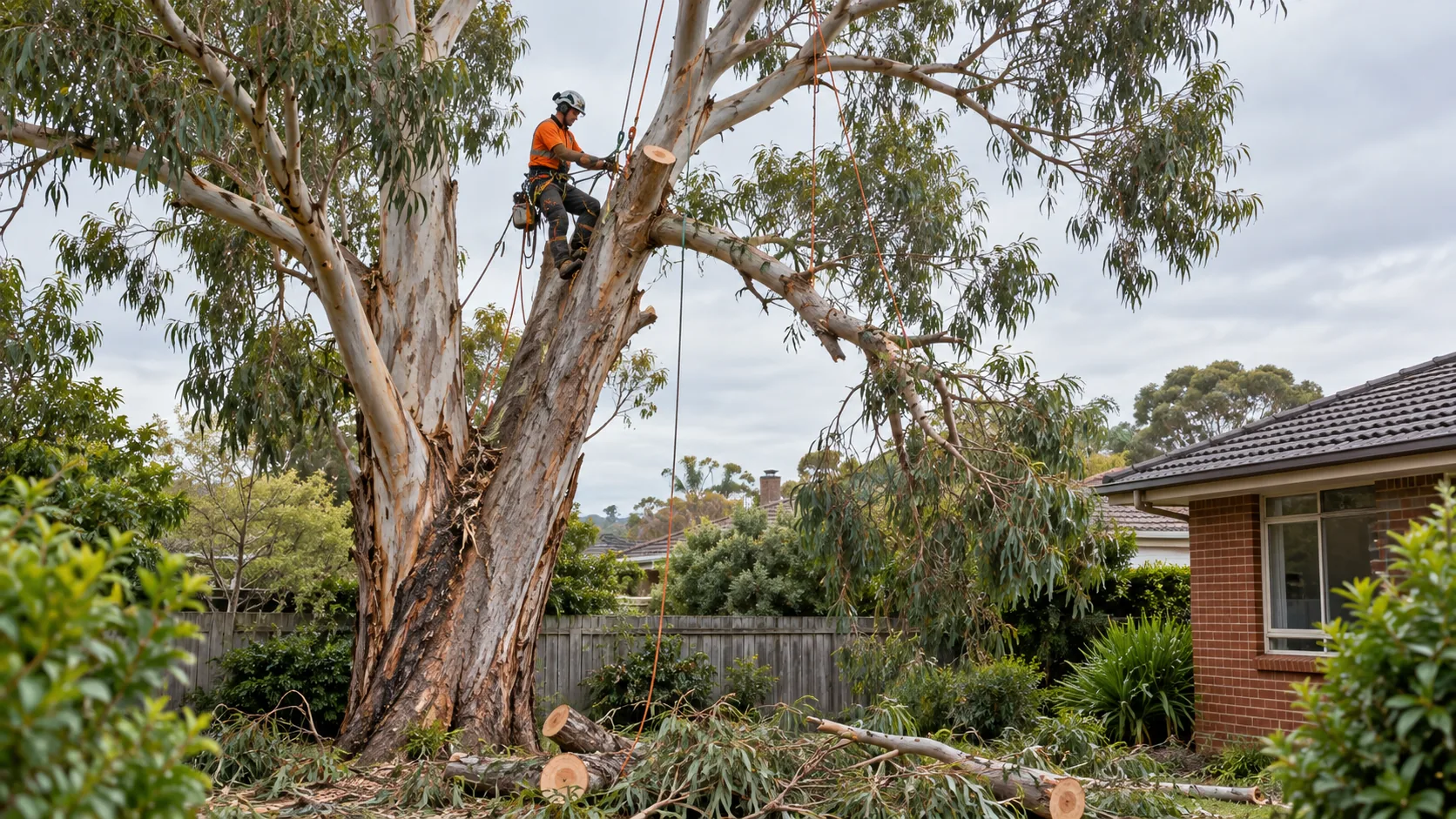
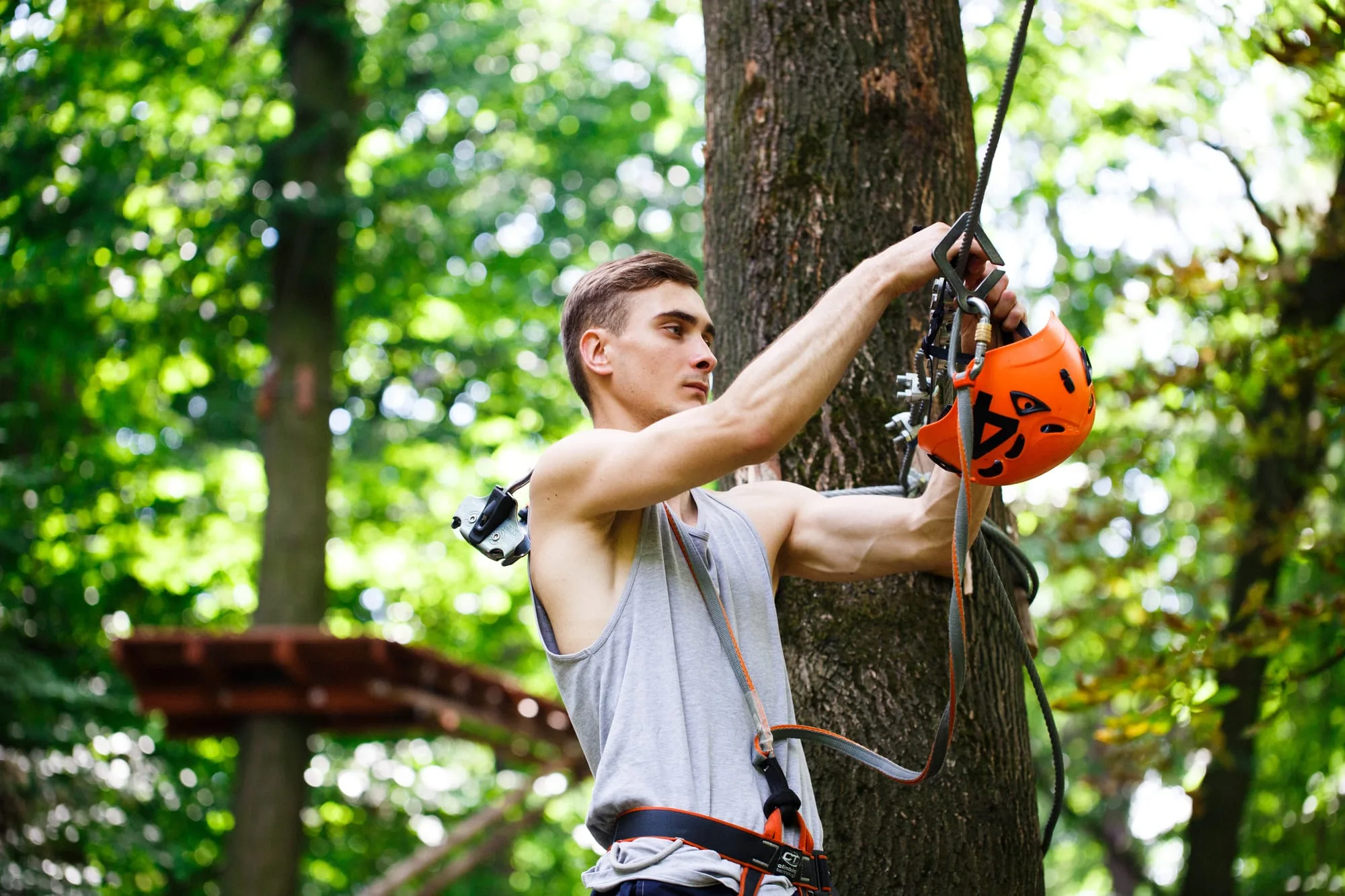
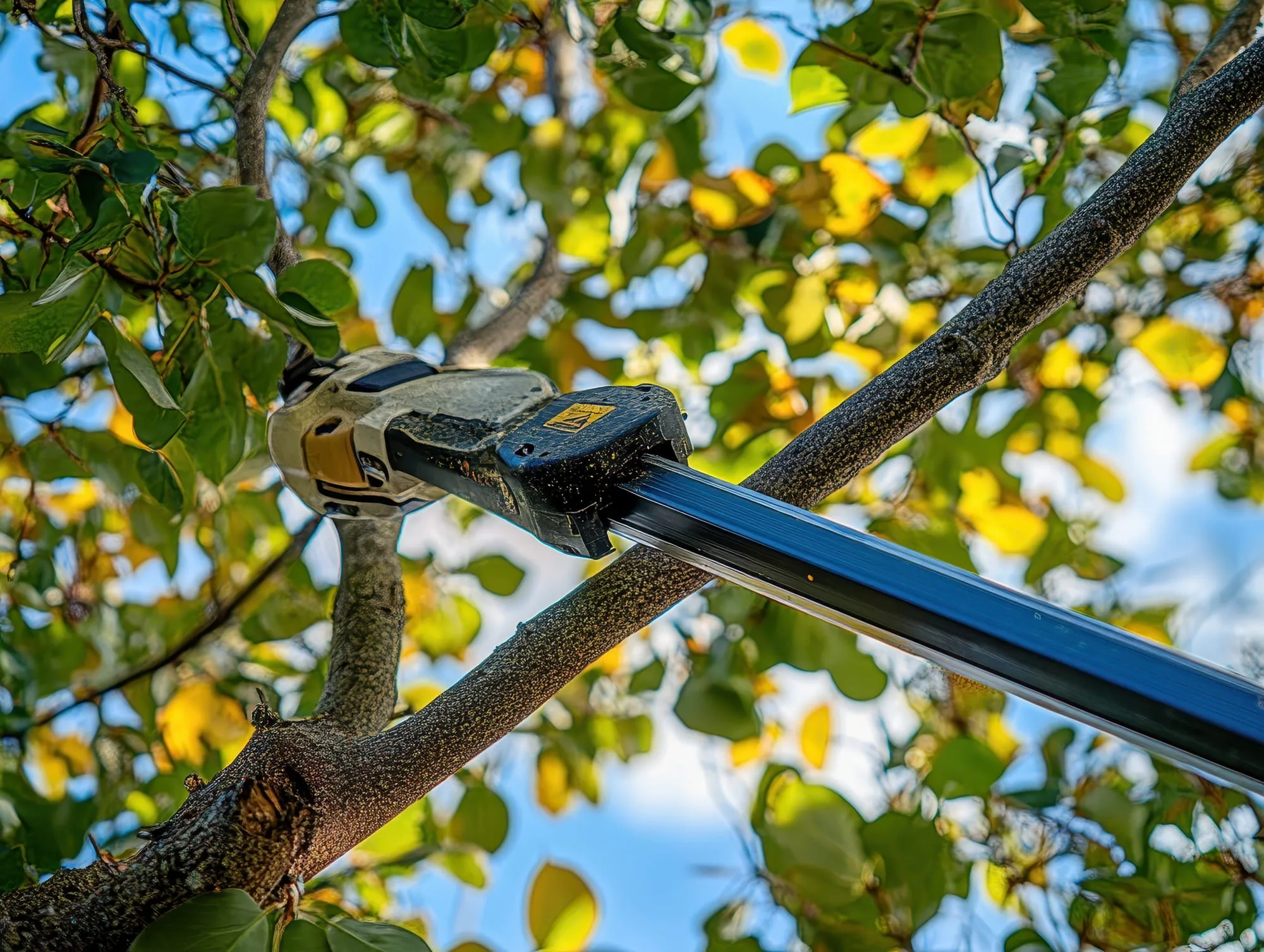
A tree can become a concern when it shows significant damage, deterioration or instability, particularly when it stands close to a home, driveway, path, fence or other regularly used part of a property.
Hazardous tree removal is not about labelling every damaged or leaning tree as dangerous. The first step is to understand what has changed, where the tree is positioned and whether removal is an appropriate response to the condition and property risk.
We assess the tree and its surroundings before defining the work. Factors such as damaged limbs, deteriorating sections, storm impact, tree size, access and nearby structures can all affect the appropriate next step.
If you are concerned about the condition of a tree on your Melbourne property, request a quote so the tree and site can be considered before removal work is planned.
When a tree may need closer assessment
Property owners often start looking for hazardous tree removal after noticing a visible change in a tree rather than knowing exactly what the problem is.
Reasons to arrange an assessment can include:
- large dead or deteriorating branches
- significant broken or damaged limbs
- storm-affected sections of the tree
- branches positioned over roofs, driveways, paths or outdoor areas
- noticeable changes that make the tree harder to manage safely
- a combination of poor condition and limited clearance around structures
- an established tree that has become a growing concern for people using the property
These signs do not automatically mean the whole tree needs to be removed. The condition of the tree and the practical risk around it need to be considered first.
Hazardous tree removal starts with the problem, not the assumption
A tree that looks concerning from the ground may have several possible management options.
In some situations, targeted tree branch removal or deadwood removal may address the immediate issue. In others, broader tree pruning may be appropriate.
Full tree removal becomes a different decision because the entire tree is being taken down rather than selected branches being managed.
The appropriate scope depends on what is wrong with the tree, the position of the affected growth, the surrounding property and whether retaining the tree remains a practical option.
What affects the cost of hazardous tree removal in Melbourne?
There is no standard price that applies to every hazardous tree removal job.
The cost can depend on factors such as:
- tree height and overall size
- condition of the trunk and branches
- amount of damaged or deteriorating material
- proximity to buildings, fences, driveways and neighbouring property
- working space around the tree
- access to the site
- how the tree can be dismantled or removed
- the amount of material involved
- the final agreed scope of work
A tree standing in an open area presents a different removal problem from one positioned close to a roof, boundary fence or narrow access point.
The tree and property therefore need to be assessed before a useful quote can be prepared.
How we approach a hazardous tree removal enquiry
1. Tell us what you have noticed
You do not need to diagnose the tree yourself.
Explain what has changed or what is causing concern. This might be a broken limb, visible deterioration, storm damage, branches over a structure or a tree that appears increasingly difficult to manage.
2. The tree and surrounding property are considered
The assessment needs to look beyond the tree alone.
We consider the condition and position of the tree, nearby structures, access, areas used by people or vehicles and the practical constraints around any proposed work.
3. The appropriate scope is identified
Removal should not be assumed simply because a tree has a problem.
Where a more targeted pruning approach may address the issue, that should be considered. Where full removal is the appropriate scope, the work needs to be planned around the tree and site conditions.
4. The proposed work is confirmed
The agreed scope should make clear what is being removed and why that work is being proposed.
This is particularly important where tree condition, limited access or nearby property affects how the job needs to be approached.
5. The work is arranged
Once the scope is understood, the removal can be arranged based on the actual tree and property requirements.
Tree condition can change how removal needs to be planned
A tree in poor condition may not behave in the same way as a sound tree during removal.
Dead, damaged or deteriorating sections can affect how branches and sections of the tree are handled. Working height, branch weight, surrounding structures and restricted access can add further constraints.
This is one reason hazardous tree removal should be treated differently from simply cutting down a tree in an open area.
The work needs to reflect the condition that prompted the removal enquiry in the first place.
Hazardous tree removal compared with related services
The right service depends on the problem that needs to be solved.
| Service | Main purpose |
|---|---|
| Hazardous tree removal | Remove a whole tree where its condition and property context make removal the appropriate scope |
| Tree removal | Remove a tree for a broader range of property or tree-related reasons |
| Large tree removal | Plan removal around greater height, size, heavy sections and site constraints |
| Deadwood removal | Remove dead or deteriorating branches while retaining the tree |
| Tree branch removal | Remove specific problematic limbs |
| Tree pruning | Manage selected growth while retaining the tree |
If the issue is a single damaged branch rather than the whole tree, full removal may not be necessary.
When large size and hazardous condition overlap
A hazardous tree can also be a large tree, but the two services address different search intent.
Large tree removal Melbourne focuses on the planning challenges created by tree size, height, heavy sections and access.
Hazardous tree removal focuses on the condition or circumstances that have caused concern about the tree.
Where both factors are present, the job needs to account for the tree’s size and its condition rather than treating either issue in isolation.
Storm damage does not always mean immediate full removal
Strong weather can leave trees with broken, hanging or damaged branches. In some cases, the visible problem may be limited to part of the canopy. In others, the damage may be more extensive.
The important step is to avoid assuming the correct service before the extent of the damage is understood.
Our storm-damaged tree services page covers storm-related enquiries specifically, while this page focuses on removal where the overall tree condition or property risk makes that the appropriate scope.
Safety and property considerations
Tree removal involves working with heavy timber, cutting equipment and material at height. When the tree is already damaged or deteriorating, the work can carry additional uncertainty.
The surrounding property also matters. Roofs, fences, gardens, driveways, neighbouring areas and overhead services can affect how the job should be approached.
For that reason, hazardous tree removal is not a suitable DIY task where significant height, heavy branches, unstable material or nearby structures are involved.
If there is an immediate threat to people, property or essential services, keep clear of the affected area and contact the appropriate emergency or utility service where required.
Hazardous tree removal around Melbourne properties
Trees on Melbourne properties can sit close to houses, garages, fences, driveways and neighbouring yards. That means the practical concern is often not just the condition of the tree but what is within reach if a damaged section fails.
A useful assessment considers both sides of that problem: what is happening with the tree and what surrounds it.
We do not apply a single removal rule to every tree that looks damaged. The proposed work should reflect the individual tree, the site and the reason the property owner is concerned.
Council rules and tree removal
Tree removal requirements can vary between Victorian councils and may also depend on the property, planning controls and the particular tree.
A tree being damaged, deteriorating or considered a concern does not automatically mean the same council rules apply in every Melbourne municipality.
Before removal, relevant local requirements should be checked where permits or protections may apply. Council-specific claims should be confirmed with the relevant authority rather than relying on a Melbourne-wide assumption.
Questions to ask before choosing a tree removal provider
For a tree that may present a safety concern, useful questions include:
- What condition or site factors are affecting the proposed removal?
- Is full removal necessary, or could targeted pruning address the problem?
- How will nearby buildings, fences, access areas or neighbouring property affect the work?
- What is included in the proposed scope?
- Are any qualifications, insurance details or other credentials relevant to the job, and can they be confirmed?
Clear answers make it easier to understand why a particular course of work is being recommended.
Frequently asked questions about hazardous tree removal
What makes a tree hazardous?
There is no single visual sign that proves a tree is hazardous. Damage, deterioration, dead branches, storm impact, tree position and what surrounds the tree can all be relevant. A proper assessment should consider the tree and the property context rather than relying on one symptom.
Does a leaning tree always need to be removed?
Not necessarily. A lean on its own does not establish that full removal is required. If a tree has changed noticeably or you are concerned about its condition, it should be assessed in context.
Can dead branches be removed without removing the whole tree?
In some cases, yes. If the concern is limited to dead or deteriorating branches, deadwood removal Melbourne may be a more targeted service. The condition of the rest of the tree still needs to be considered.
What if only one large branch is damaged?
A single damaged limb may call for targeted branch removal rather than full tree removal. Its size, position, condition and proximity to structures all matter.
Is hazardous tree removal the same as emergency tree removal?
No. Hazardous tree removal describes work where tree condition or site risk makes full removal an appropriate option. An emergency service relates to urgent circumstances requiring a rapid response. Confirm current availability when enquiring.
How much does hazardous tree removal cost in Melbourne?
The cost depends on the individual tree and site. Size, condition, access, working height, surrounding structures and the removal scope can all affect the job. A site-specific assessment is needed before an accurate quote can be prepared.
Do I need council permission to remove a hazardous tree?
Requirements vary between councils and properties. Local planning controls or tree protections may apply, so the relevant council requirements should be checked before removal where necessary.
Can pruning make a concerning tree safe instead of removing it?
Sometimes a targeted pruning service may address the specific problem, particularly where the concern relates to selected branches. Whether pruning is appropriate depends on the tree’s condition and the issue being managed.
What should I do if a damaged tree appears to pose an immediate danger?
Keep people away from the affected area. If there is an immediate threat to people, property, roads or essential services, contact the relevant emergency or utility authority as appropriate. Do not attempt hazardous work at height or around unstable heavy branches yourself.
Request a quote for hazardous tree removal in Melbourne
If a tree is damaged, deteriorating or causing concern around your property, you do not need to decide whether removal is required before making an enquiry.
Tell us what you have noticed, where the tree sits and what is nearby. The next step is to consider the tree and site so the appropriate scope can be discussed.
Request a quote for hazardous tree removal in Melbourne.