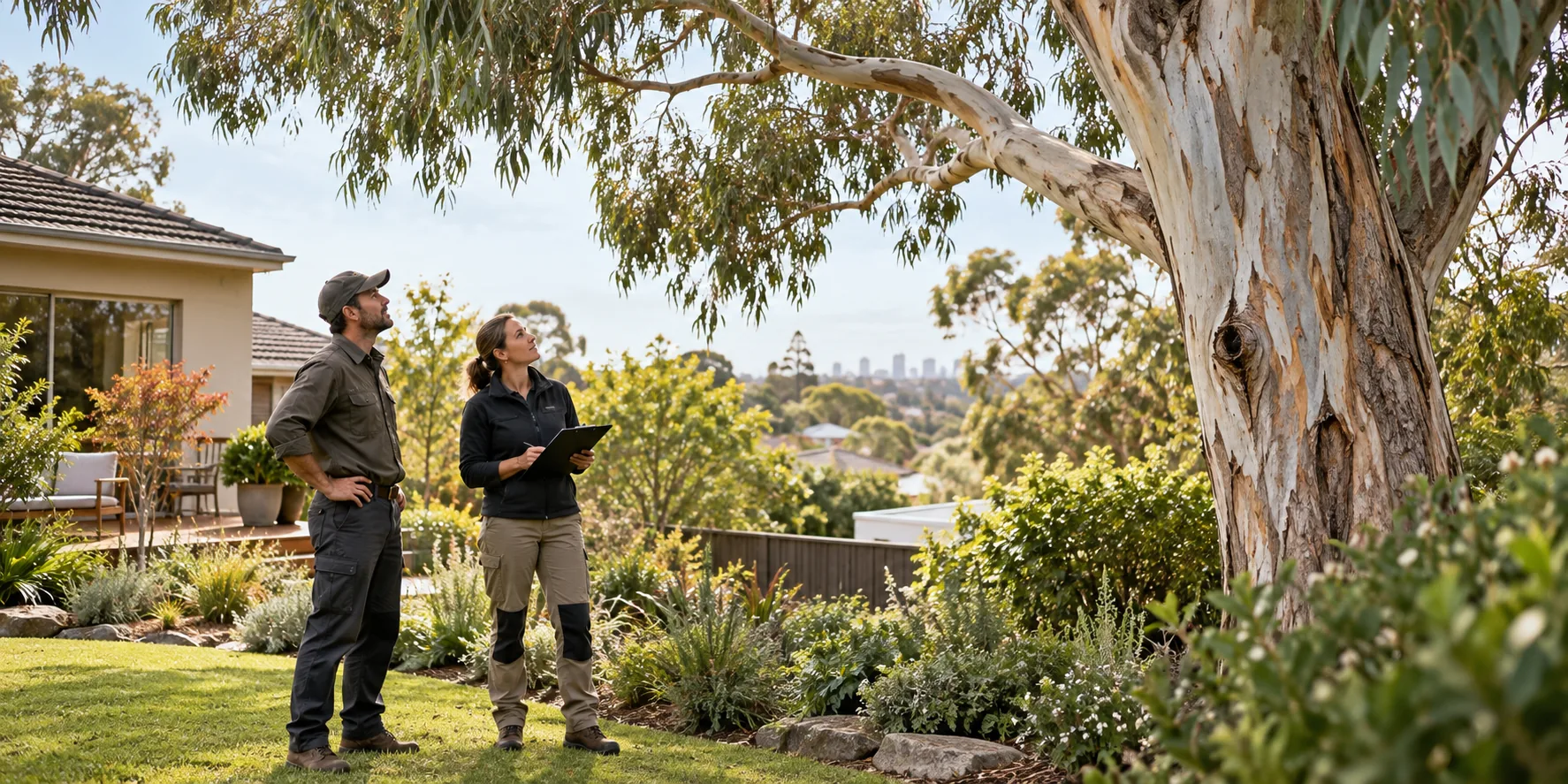
An arborist report is written documentation about one or more trees, prepared for a defined purpose. Depending on why the report is required, it may need to describe the tree, record observations, address a particular concern and provide recommendations or other relevant information.
For Melbourne property owners, the first question should be why the report is needed.
A homeowner wanting to understand a declining tree has a different need from someone who has been asked to provide written tree information as part of a planning or council process. Likewise, a property manager documenting a tree concern may need a different scope from a person deciding whether pruning or removal should be considered.
That distinction matters because the requested document may need to meet specific requirements. Those requirements should be established before the assessment and report scope are confirmed.
Tree Pruning Services Melbourne works from a practical starting point: understand the tree, the property and the reason for the enquiry before deciding what service is appropriate. Where formal reporting is required, the report purpose and required qualifications also need to be clear.
When an arborist report may be needed
An arborist report may be requested when a tree issue needs to be documented rather than discussed verbally.
Situations can include:
- a council or planning process requests information about a tree;
- proposed property works may affect an established tree;
- a property owner needs written information about tree condition;
- a tree is close to a building, boundary or proposed work area;
- a property manager or owners corporation needs a documented assessment to support a decision;
- concerns about tree condition or structure need to be recorded in writing;
- pruning or removal is being considered and a third party requires supporting information;
- the owner needs a written record of observations and recommendations for future management.
Not every tree enquiry needs a formal report.
If the main goal is simply to understand why a tree looks different, a tree health assessment may be the more relevant starting point. If the concern is possible failure and what could be affected, a tree risk assessment is a different service intent.
The reason for the document should be established before deciding what kind of report is required.
What an arborist report may involve
The content of an arborist report depends on its purpose and the requirements of the person or organisation requesting it.
A report may need to consider information such as:
- the tree or trees being assessed;
- their position on the property;
- observable tree condition;
- canopy, branch or structural concerns relevant to the report purpose;
- the surrounding property and nearby structures;
- the reason the assessment was requested;
- proposed work that may affect the tree;
- recommendations relevant to the defined scope;
- supporting photographs or site information where required;
- the qualifications or professional details of the report author where the receiving party requires them.
These points are not a promise that every report contains the same sections. A report for one purpose may need information that is irrelevant to another.
The safest approach is to identify the required outcome first and then confirm the report scope against it.
How we approach an arborist report enquiry
1. Establish who needs the report and why
The first step is understanding the reason for the document.
If a council, planner, property professional, owners corporation or another party has asked for a report, any written request or stated requirements can help define the scope.
This avoids arranging a general assessment when a specific type of document is actually required.
2. Clarify what needs to be assessed
The enquiry should identify the tree or trees involved and the issue that prompted the report.
Relevant context may include visible decline, damaged branches, proposed building or landscaping work, concerns about retention, or a request for information before tree work is considered.
3. Consider the property context
Tree reporting often depends on more than the tree itself.
Nearby buildings, fences, driveways, neighbouring property, existing landscaping and proposed work can all be relevant to the assessment purpose.
4. Confirm the required report scope
Before the work proceeds, the customer should understand what the report is expected to address.
Where a third party will receive the document, its requirements should be checked rather than assumed.
5. Confirm the required qualifications
This step is particularly important for formal reports.
Different councils, planning processes or other receiving parties may specify particular qualification requirements. Confirm the report writer’s qualifications before relying on a report for a specific requirement.
That protects the customer from paying for a document that may not suit its intended purpose.
Arborist reports around Melbourne homes and properties
Melbourne properties can contain established trees close to houses, garages, driveways, fences, neighbouring land and proposed work areas.
Those site conditions can be important when written tree information is required.
For example, a mature tree beside a proposed renovation may raise questions about the tree’s condition, location and relationship with the planned work. A tree near a shared boundary may require clear documentation of what was observed and what action is being considered. A property manager may need a written record that explains a tree concern in practical terms for an owner or committee.
Local requirements can also differ across Melbourne because planning controls and council processes are not uniform.
For that reason, this page does not claim that one report format or qualification standard applies to every property. Where a council or other authority is involved, its current requirements should be checked for the specific site and purpose.
Who arborist reports may be for
A written arborist report may be relevant for:
- homeowners who have been asked to provide formal tree information;
- residential property owners considering works around an established tree;
- landlords and property investors documenting a tree issue;
- property managers who need written information for an owner or decision-maker;
- owners corporations or body corporate properties considering tree management decisions;
- commercial property owners where a tree issue needs to be documented;
- real estate or property professionals dealing with a tree-related property matter;
- people responding to a council, planning or other third-party request for tree information.
The purpose matters more than the customer category. Two homeowners can need very different reports depending on what the document will be used for.
What to expect
You do not need to know the technical name of the report before making an enquiry.
A practical process is:
-
Tell us why the report is needed.
Explain who requested it, what they have asked for and which tree or trees are involved. -
Share any written requirements.
If a council, planner or another party has supplied instructions, those requirements can help determine the correct scope. -
Clarify the assessment needed.
Consider the tree, property conditions, the concern being documented and the intended use of the report. -
Confirm the report scope and qualification requirements.
Establish what needs to be documented and whether the receiving party requires a particular professional qualification. -
Confirm the proposed service.
The scope should be clear before the customer decides whether to proceed.
This process is deliberately different from starting with a generic report template. The document should be shaped by its purpose.
Arborist report, tree health assessment or tree risk assessment?
These services can overlap in subject matter, but they are not interchangeable.
Arborist report
An arborist report is a written document prepared for a defined purpose. The document may record assessment findings, observations and recommendations according to the agreed scope.
Tree health assessment
A tree health assessment focuses on the apparent condition of a tree and changes such as branch decline, canopy changes or damaged growth. It may help determine what further action is appropriate without necessarily producing formal written documentation for a third party.
Tree risk assessment
A tree risk assessment focuses more specifically on possible tree or branch failure, the likelihood and consequences relevant to the assessment scope, and what may be affected.
A risk assessment can potentially inform a report, but requesting a risk assessment does not automatically mean a formal report of a particular standard will be supplied.
Clarifying the desired output at the start prevents these services from being treated as the same thing.
What affects arborist report cost in Melbourne?
Report pricing depends on the required scope and documentation.
The cost of a report can depend on the scope required.
Factors may include:
- the number of trees involved;
- the purpose of the report;
- the type and depth of assessment required;
- property and site conditions;
- the amount of information that needs to be documented;
- whether specific council or planning requirements must be addressed;
- whether supporting photographs, plans or other material are required;
- the professional qualification required of the report author;
- whether further investigation is needed before conclusions can be documented.
A short document about one straightforward tree issue is not necessarily comparable with a report covering several trees and a detailed third-party brief.
Before comparing prices, compare the scope. A cheaper report that does not meet the receiving party’s requirements may not solve the customer’s problem.
Formal report requirements should be checked before the assessment
This is one of the most important steps in arranging an arborist report.
If the report is being requested by a council, planning professional, insurer, owners corporation or another third party, ask what they actually require.
Useful details to confirm can include:
- what question the report needs to answer;
- whether a particular type of tree assessment is required;
- whether the author must hold a specified qualification;
- whether the report needs particular site or tree information;
- whether plans, photographs or other supporting material are expected;
- whether the receiving party has its own report criteria.
Do not assume that a document described as an “arborist report” will automatically be accepted for every purpose.
Likewise, terms such as “Level 5 arborist report” should not be used as a business claim unless the relevant qualification and report capability have been confirmed.
Safety and property considerations
An arborist report can involve trees with damaged, deteriorating or difficult-to-observe branches.
Relevant site considerations may include:
- dead or damaged limbs;
- branches over roofs, driveways or paths;
- trees close to neighbouring property;
- previous branch failure;
- storm-affected growth;
- restricted access around buildings and gardens;
- areas where people or vehicles regularly pass beneath the tree.
Customers should not climb a tree or cut branches to gather information for a report.
If a tree or branch appears to have already failed or presents an immediate site concern, keep people away from the affected area where practical and seek appropriate assistance. This page does not claim an emergency response service or response time.
Council rules and arborist reports in Melbourne
Council and planning requirements can vary across Melbourne.
Whether a report is required, what it must address and who is qualified to prepare it can depend on:
- the council;
- the property;
- planning controls;
- the tree;
- the type of proposed work;
- protected-tree provisions;
- overlays or other site restrictions;
- the specific application or decision involved.
There is no single Melbourne-wide rule that makes the same arborist report suitable for every property.
Any council-specific statement should therefore be checked against the current requirements for that property before the report is commissioned.
How to choose an arborist report provider
The quality of a report is not just about how long the document is. It needs to suit the purpose for which it was requested.
Before engaging a provider, ask:
- What type of report are you proposing, and why does it suit my situation?
- What will be assessed and documented?
- Does the report address the requirements supplied by my council, planner or other receiving party?
- What qualifications does the report author hold, and do they match the stated requirement?
- What information do you need from me before the assessment?
- What is included in the quoted scope?
- Will I know if further assessment is required before the report can be completed?
Where qualifications or professional status matter, ask for verifiable details rather than relying on broad descriptions such as “qualified” or “certified”.
Common questions about arborist reports in Melbourne
What is an arborist report?
An arborist report is written documentation about a tree or group of trees prepared for a defined purpose. The exact content depends on what needs to be assessed, documented and communicated.
Why would I need an arborist report?
You may need one because a council, planner, property professional, owners corporation or another party has requested written tree information. A report may also help document tree condition or recommendations for a property decision.
How much does an arborist report cost in Melbourne?
No report price has been confirmed for this business. Cost can vary with the number of trees, report purpose, assessment depth, site conditions, required documentation and qualification requirements. Confirm the scope before comparing quotes.
Is an arborist report the same as a tree inspection?
Not necessarily. An inspection or assessment can help understand a tree, while an arborist report is the written output prepared for a particular purpose. A formal report may also need to meet requirements that a general inspection does not.
Is an arborist report the same as a tree risk assessment?
No. A tree risk assessment has a specific risk-focused purpose. An arborist report is a document and may address different subjects depending on the brief. If risk needs to be formally assessed or documented, clarify that requirement before arranging the service.
What is a Level 5 arborist report?
People often use this phrase when a report is expected to be prepared by someone with a particular arboricultural qualification level. The actual requirement should be confirmed with the organisation requesting the report. Check the report writer’s relevant qualifications before commissioning the report.
Will council accept any arborist report?
Do not assume so. Requirements can vary between councils, properties and applications. Check what the relevant council requires, including any qualification or report-content requirements, before commissioning the document.
Can an arborist report recommend tree pruning or removal?
A report may include recommendations where those recommendations fall within its agreed scope and are supported by the assessment. A recommendation should not be assumed before the tree and purpose of the report have been considered.
Ask about an arborist report for your Melbourne property
If you have been asked for an arborist report, start by telling us who needs the document, why they need it and what requirements they have given you.
If you are unsure whether you need a formal report or simply need help understanding a tree concern, describe what is happening with the tree and what decision you are trying to make.
We can discuss the appropriate next step from there, subject to confirming the qualifications and report capability required for the intended purpose.
Contact the team to discuss an arborist report in Melbourne.